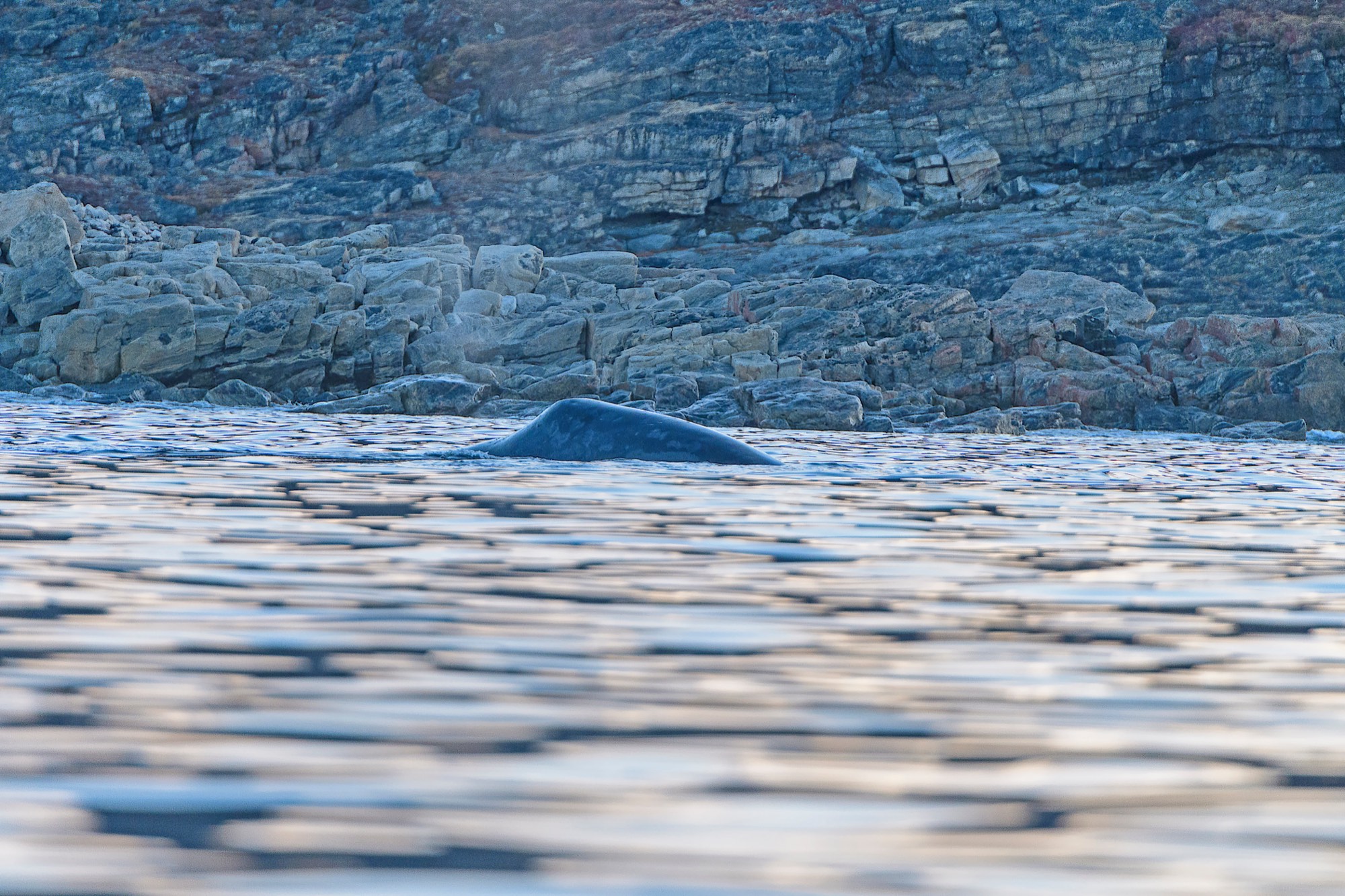
Bowhead whales are perhaps the longest-living mammals in the world, with some whales having swum these oceans for 200 years. How they live this long remains a mystery.
Overview
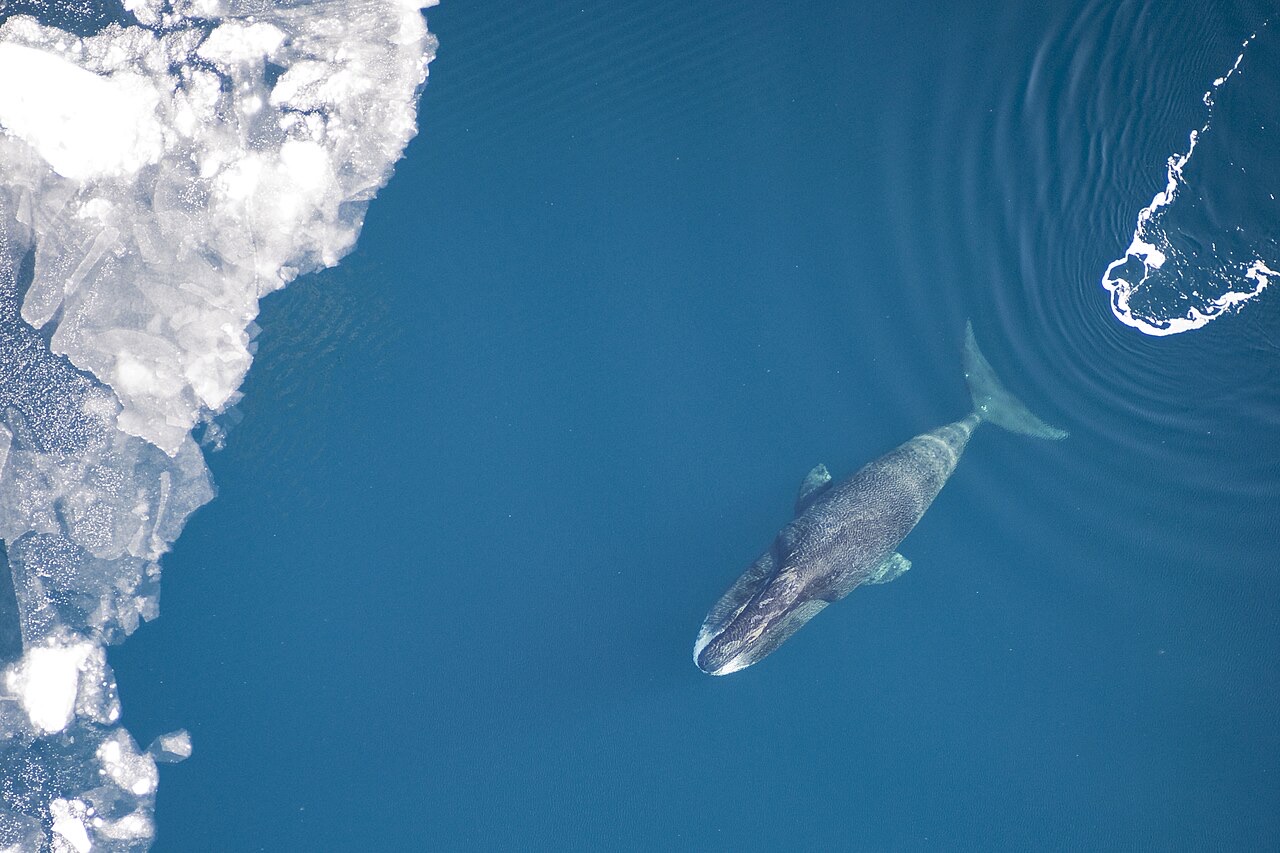
The bowhead whale lives in the ice-filled Arctic and subarctic seas. Life as a bowhead whale starts with conception, which mostly happens in March, followed by a gestation period of 13-14 months. You are born around 1 ton heavy and are already thrust into ice-cold waters often packed with sea ice. Luckily, you were made with ice-breaking abilities. Researchers have reported bowheads breaking ice up to 60 cm thick. The “bowed” head also makes it easier to breathe through the cracks in the ice you make.
During the first year, you gain weight quickly to reach 10-12 tons. After 6-12 months of nursing, you are weaned and must forage for yourself. Due to your coastal habits, you forage mostly in relatively shallow waters at about 200m deep (400m is possible, though). Here you feed primarily on zooplankton, but your diet also includes fish and benthic invertebrates. In total, about 100 prey species are consumed. When migrating, you will gather in loose aggregations, and as an immature whale, you will migrate first. The years following weaning will be a bit different for you. You will not gain any weight and might actually lose weight. Every resource you have available is likely directed towards growing your large head and baleen rack. You are a slow-maturing species and will be around 25 years old when you are sexually mature. You are very long-lived and might live for as long as 200 years!
Feeding
Bowheads can feed on relatively low-density prey. Mostly, bowheads forage in the water column, but they also bottom-feed and skim-feed at the surface. Like right whales, bowheads ram the water column with mouths open through aggregations of prey. While swimming slowly the prey and water enter through a gap in the baleen, and water leaves through the sides of the mouth. Prey is trapped in the baleen and consumed. About 90% of prey items are tiny copepods, a creature the bowhead is 50 billion times larger than! It eats approximately 500 kg of copepods each day. When you consider that tiny copepods have a volume of 0.01-0.02mL each, this means that bowheads catch massive daily numbers of copepods.
Despite combating heavy drag, the dives can be as long as 85 minutes. In order to catch as much food as possible, they must pick the right feeding strategy: feed only when very large prey aggregations are present or swim slowly through lesser aggregations. Most of the time, they adopt the second style. They move continuously at slow speeds (3-9 km/hr). The large mouth allows for the filtration of around 2000 tons of water and prey every dive. But how is this effective? A physical model of the bowhead mouth was made by Alexander Werth to figure out the mechanics of this feeding style. The results indicated that unique features of the bowhead mouth, like the curvature of the baleen, jaw extension and tongue mobility, create a steady and unidirectional flow of water in the mouth. Bernoulli and Venturi effects were also found.
These may also prevent the formation of a bow wave in front of the whale, which prey could escape by. Bowheads generally feed singly, but sometimes form groups in a V-formation, which likely is another way to prevent prey from escaping.
Song
Communicating through sound is hardly unique in the animal kingdom. Most mammals do it, but only a select few sing! Often, when you think of animal song, you think of birds or maybe even the humpback whale, which we have previously visited. A less studied and much less famous singer is the bowhead whale. The Spitsbergen population was studied for a 3-year period, and 184 different song types were discovered. Bowhead songs are different from humpback songs. They mostly consist of a single phrase with repeated frequency and amplitude modulations. Bowheads can produce two different sounds at the same time. Songs can last for several minutes and are usually found in the range of 20 Hz to 5000 Hz. Unlike humpback whales bowheads sing many different songs within a single season, and they rarely repeat from year to year. In the Bering-Chukchi-Beaufort (BCB) population, however, they are sometimes known to share song types. This diversity in song could be due to many factors, but guesses as to why include immigration from other populations and individual identification within populations. We likely won’t know why until more research is done. Another possible use of acoustics for the bowhead whale was proposed in a study conducted by John C. George. The study observed bowhead whales in ice-filled conditions in Alaska for a duration of four days. 665 whales were reported to swim by during this period from acoustic and visual data. Only 17% of these were actually seen. The rest of the time, they were simply beneath the ice. They depend on breaking the ice for breathing, however, they can’t break thick ice, so they must navigate accordingly. The acoustic tracking showed that they avoided a large ice floe, which they likely could not break.
It is therefore suggested that bowheads use their calls to quantify the thickness of the ice when navigating during migrations.
Aging with grace
Cetaceans generally live long lives, but the bowhead whale is extreme, with one individual estimated at 211 years.
The bowhead whale is one of the heaviest animals, often over 80 tons. This large size should also mean more cells, which, along with high age, means greater potential for genetic changes that lead to cancer. The bowhead is not at high risk of cancer, however. And the same goes for many other large animals, like the elephant. This incongruity is called Peto’s Paradox. The bowhead whale, because of its size and age, is thus the perfect example of nature combating cancer effectively.
The cell’s genome is constantly damaged in its normal processes. One way is through double-stranded DNA breaks, which can lead to cell death. Another is a DNA mismatch, in which two non-complementary bases are aligned. These can lead to genetic mutations and thereby cancer. Another way to think about it is to consider the genome as a vast instruction manual that gets copied billions of times over a lifetime. Each copy introduces small errors — a torn page, a misprinted word. In most animals, these errors accumulate over time. In the bowhead, the proofreading is so precise that the manual stays remarkably intact even after two centuries of copying. Particularly, the protein CIRBP, which is found in high concentrations in bowheads, seems to be important. It is thus a strategy of protecting the genome through effective repairs, that seems to protect against cancer and aid longevity.
Other factors are also being researched. For example, 45 liver genes and 53 kidney genes with unique coding sequences were found in a study. These might turn out to be important.
The mystery of how bowheads get so old is thus still largely unknown, but time might reveal one of evolution’s greatest adaptations.
After having learned about the incredible longevity of bowhead whales, you might have asked yourself how scientists came up with these age estimates. The answer is that there are many methods, and no single method can definitively provide the age of the whales. However, based on the finding of stone harpoon tips from bowheads, it seems almost certain that they live at least 100 years, because these tips were only used in a specific time period.
The primary method is called aspartic acid racemization. The technique is based on the fact that aspartic acid comes in two forms, laevo (L) and dextro (D). Only the L-form is used in living proteins. In stable proteins, the L-form is slowly, but at a constant pace, converted to the D-form - this is called racemization. The D/L ratio will increase with age, which means that the age can be calculated with the D/L ratio.
Other techniques, like annual baleen growth increments and tympanic-bulla growth layers, can also be useful for younger whales.