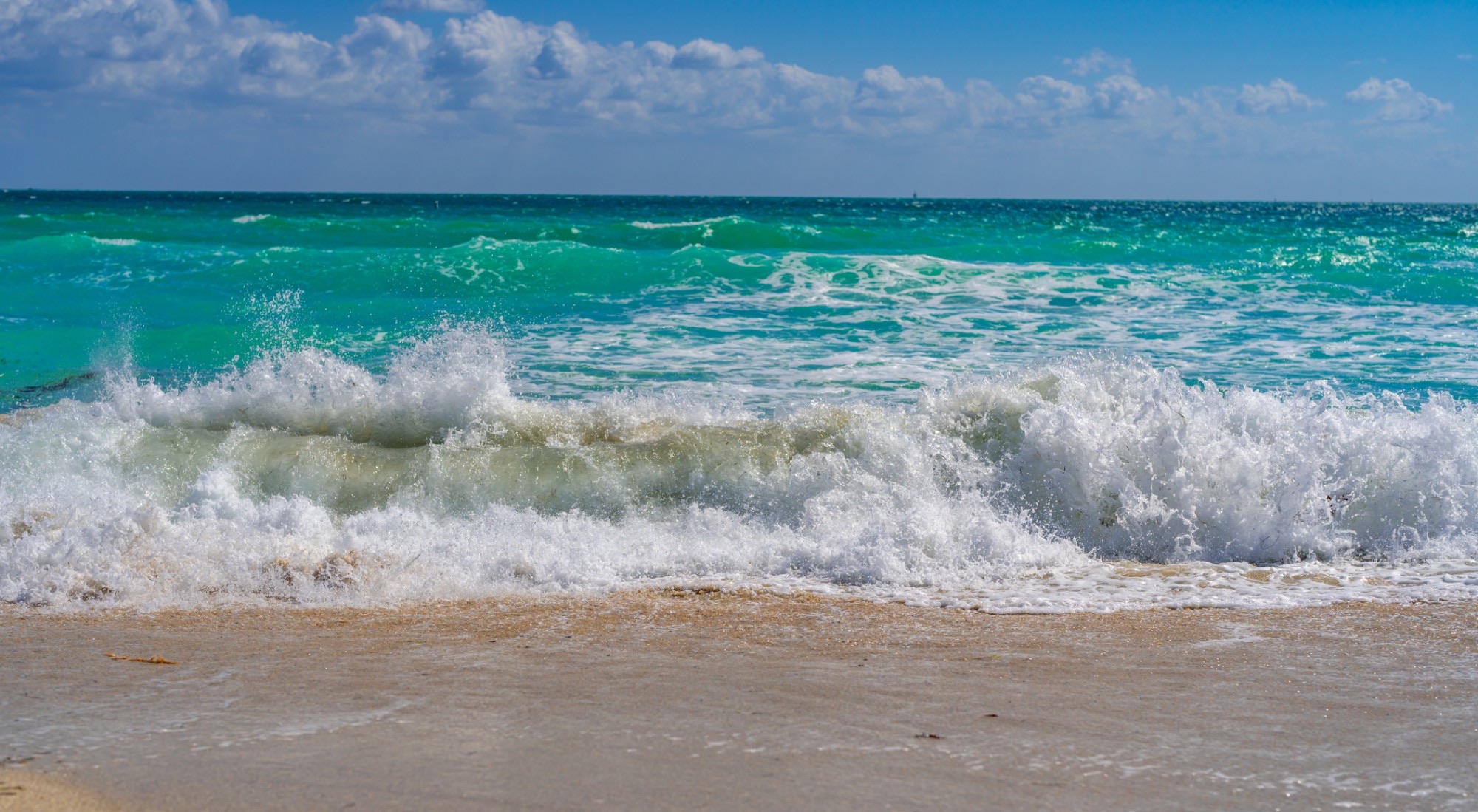
Imagine being 50 million years in the past on a bank in the Tethys Sea. You spot an adventurous wolf-like mammal dipping its paws in the water. That was the first step in exchanging 300 million years of adaptation to a terrestrial environment with that of an aquatic one. It was a small decision at the time, but one that shaped the aquatic world we know today of enormous whales and acrobatic dolphins and porpoises.
The first steps toward an aquatic life
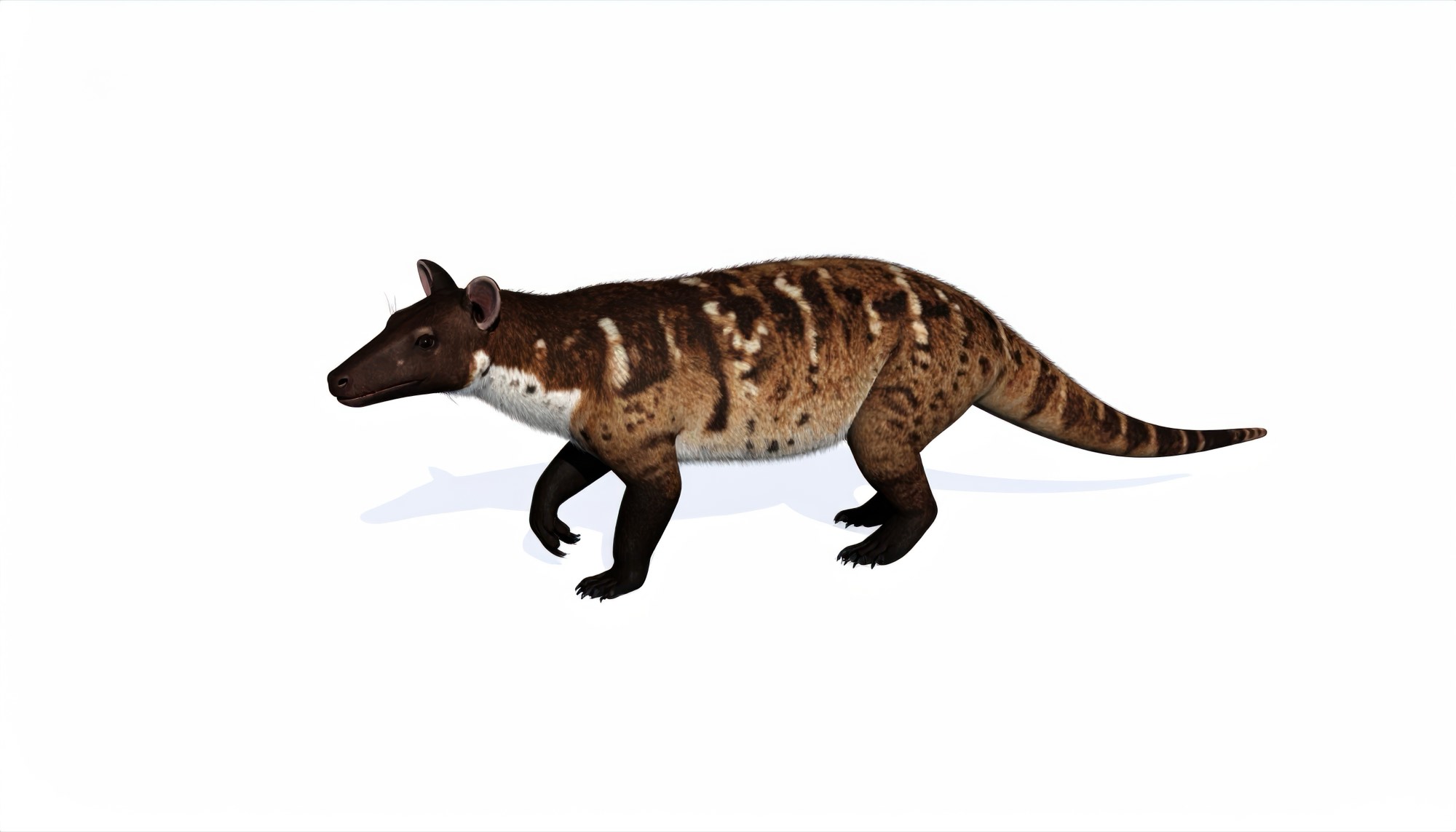
The transition from living on land to inhabiting the water was a slow and tricky process. It happened largely in two phases. In the early Eocene, the journey from a fully terrestrial lifestyle slowly evolved into a fully aquatic one over approximately 10 million years. This is where the Pakicetus enters the picture. The Pakicetus was a four-legged land mammal about the size of a small wolf, most likely with a thin fur coat. Unlike today’s cetaceans, the Pakicetus did not hear well in aquatic settings. It lacked most of the adaptations in and around the ears of today’s cetaceans and, for the same reasons, probably did not dive very deep. It did, however, have the involucrum. Cetaceans have bones on their skull that enclose the middle ear. The inner parts of these bones are so thick in cetaceans that they got their own name - the involucrum. This matters because it is one thing that both the earliest whales had and the now-living ones have. In a sense, it is largely what makes a cetacean.
It lived in an area that is now Pakistan and had its first swim in rivers and streams near the Tethys. It was likely amphibious and ate both land animals and freshwater fish and likely hunted with an ambush strategy. It was still optimized for living on land, but it is recognized as one of the first cetaceans and probably felt quite at home in the water.
The transition
The next step in the transition to becoming fully aquatic came in the form of Protocetidae (49-37 MYA). Protocetids are the first archaic cetaceans with a wide distribution. They inhabited North America, North Africa, West Africa and South America, which is a strong indication of them being oceangoing. In this section, we will focus on the particular case of the Maiacetus. The Maiacetus was a four-legged animal about 2,6 m in length and weighed 280-390 kg. It had shorter hind limbs than its predecessors but could still carry its weight on land. It likely foraged in the ocean and came back to shore to rest. The Maiacetus displayed a strong adaptation that points in the direction of the cetaceans we know today. The pelvis was only partially connected to the backbone. This allowed much greater flexibility and movement for the spine to make the powerful up-and-down undulations we know from cetaceans today. Something our strongly connected human pelvis is unable to do. A quite remarkable finding came from the unearthing of Maiacetus in Pakistan by Philip D. Gingerich. Gingerich and his team discovered a fully grown Maiacetus female with a near-term fetus. The fetus was positioned head-first, unlike cetaceans of today who give birth tail-first. This suggests birth on land, like today’s land mammals. Another thing they noticed was the impressive development of the fetus. This indicates the importance of being strong and able to survive in a harsh environment almost from birth. Not unlike today’s cetacean infants, who cannot hide from predators in the 3D world of the oceans.
Becoming fully aquatic
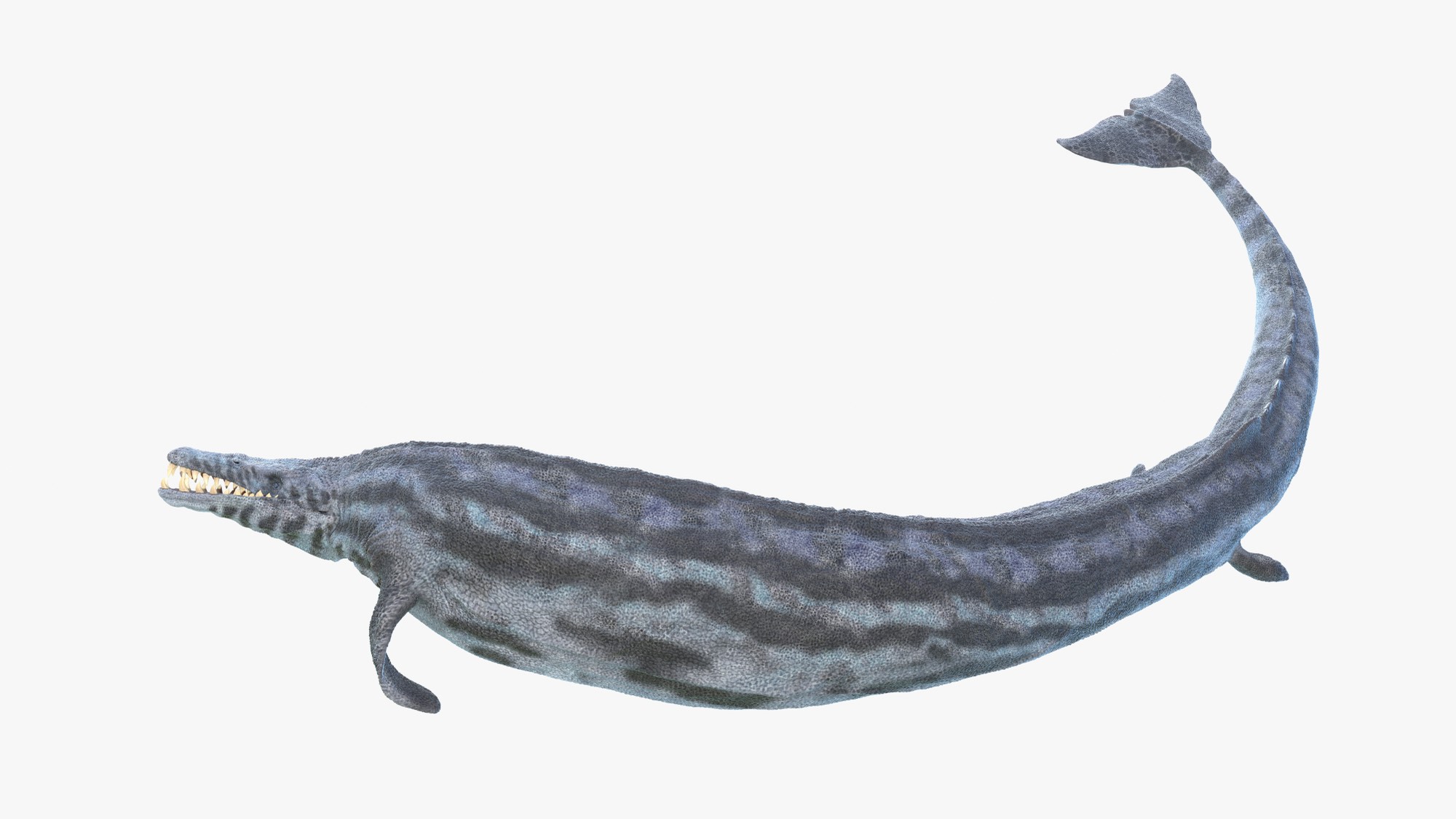
40 million years ago, the first fully aquatic cetaceans appeared: the basilosaurids. The family of basilosaurids contains around 20 species and varies highly in size from 2.5m to 18m. Basilosaurids had small hind limbs, flippers and the structure for a tail fluke. Tail flukes do not actually contain bones, so no one can know for sure, but the vertebral column resembles that of whales that do have tail flukes. These changes, however, meant that they no longer could support their weight on land and had to rely entirely on the aquatic environment. Bringing them an important step closer to the cetaceans we know now. Another adaptation they made for the aquatic lifestyle was the moving of the nostrils to a place further back on the skull to allow for easier air exchange.
They most likely moved somewhat slowly through the water, propelled by their tails. In terms of body shape, they varied from dolphin-like to a sea serpent. Basilosaurids are thought to have been feeding on individual prey items. They have heterodont dentition, meaning that they have several kinds of teeth. It is likely that they grabbed the prey with their front teeth and chewed with the cheek teeth before consumption. At their time, they were likely apex predators feeding on everything from smaller basilosaurids to large fish. It is easy to imagine the aquatic environment changing with such a ferocious predator entering. Up to 16m of muscle and teeth made to catch and chew you, now entirely adapted for living in water.
Neoceti
The next step in the process was the Neoceti. Whales as we know them today. Neoceti is a taxon that contains the most ancient ancestor of today’s cetaceans all the way up to the whales and dolphins of today. Now there are more than 90 living species belonging to Neoceti.
Neoceti evolved from basilosaurid ancestors approximately 40-34 million years ago and diverged into two suborders - the Mysticeti (baleen whales) and the Odontoceti (toothed whales). Mysticeti and Odontoceti are each other’s closest relatives, which was revealed based on fossil discoveries and genetic data. The two suborders have quite different skill sets as of today. The Odontoceti has evolved echolocation, which allows them to find objects as small as a coin in complete darkness. Some have kept the method of preying on single animals with pincer-like jaws used to catch prey. Others have developed suction feeding. Some live in groups of up to thousands while others live solitary lives.
The Mysticeti use filter feeding, skim-feeding and suction feeding (which will be covered later in the course). Many Mysticeti often travel great distances and rely on large patches of prey, which gives them a distinct seasonal pattern.
These and many more adaptations happened over the last 40 million years to create the impressive cetaceans we now know.
Data element: Tidslinje
The inhospitable environment of the oceans has complicated the research and knowledge acquisition on cetaceans. The transition from land to water was virtually unknown for a long time. The first archaic whale ever publicly described was the Basilosaurus by naturalist Richard Harlan in 1834. In 1936, “Review of the Archaeoceti” was published, and it described all the studies into Archaeoceti so well that new studies did not seem necessary.
In the 1980s, everything changed. Paleontologists discovered many fossil cetaceans from the Eocene. This happened mostly in India and Pakistan and has resulted in the cetacean origin being one of the most well-known in the fossil record. Among the pioneering paleontologists is Philip Gingerich, who helped discover the Pakicetus and the Maiacetus Innus who we have previously encountered in this lesson. The most important findings from the discovery of the Pakicetus were the involucrum and a particular form of ankle bone that is only found in Cetacea and Artiodactyla (even-toed hoofed mammals such as pigs). So the two must share a history. This is also backed by DNA studies, which came to the same conclusion: that Artiodactyla and cetaceans share gene sequences and therefore must be related. To add to that, the DNA studies also showed that cetaceans share a gene sequence which is only found in one other animal: the hippo! So much points to the hippo being the closest relative to cetaceans.