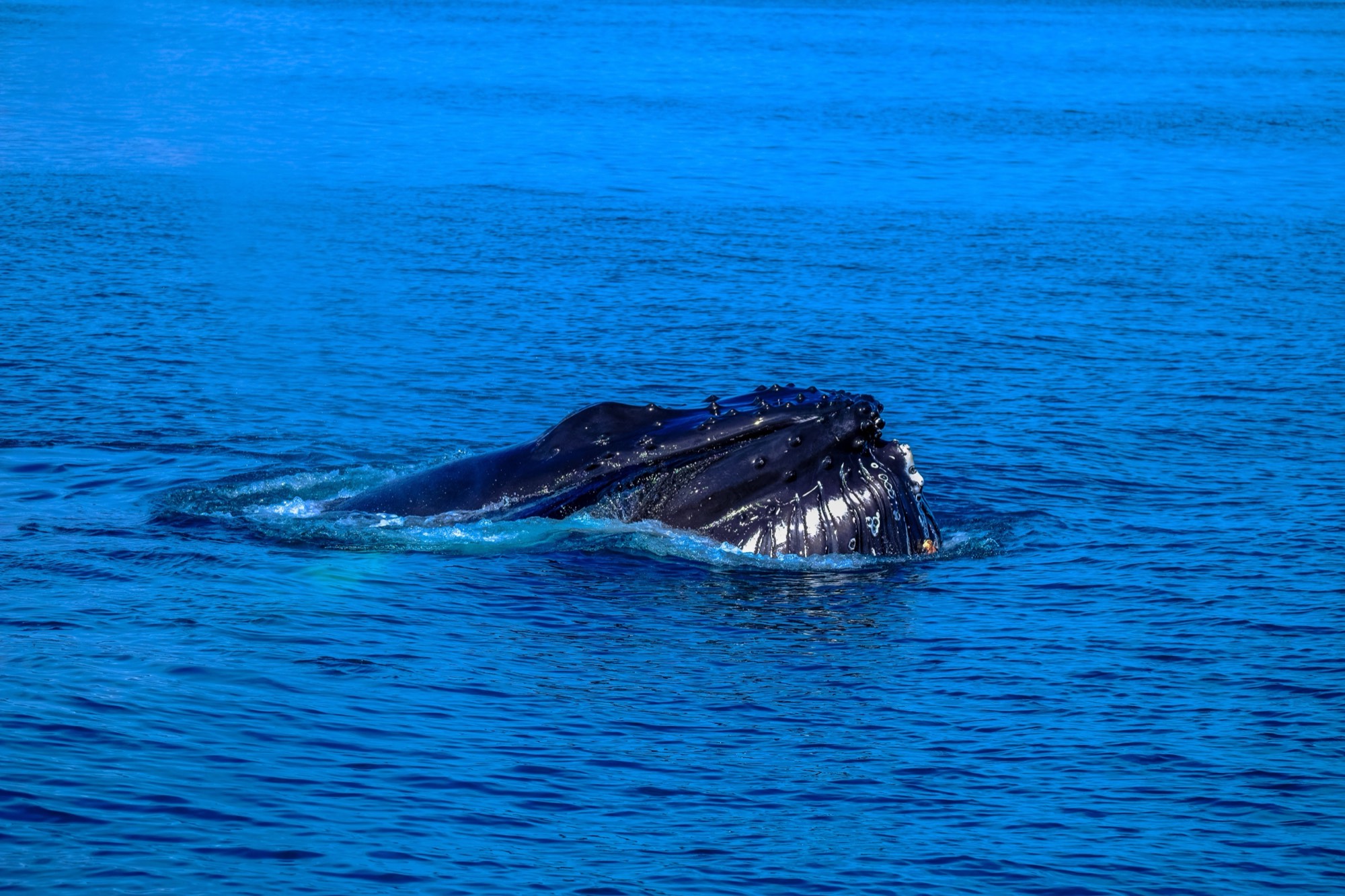
Imagine having to choose between fighting and fleeing when a pack of killer whales closes in. Imagine thinking about every single breath, and raising a baby that drinks milk thicker than cream while you haven't eaten in months. For cetaceans, this is everyday life. How do they manage to defend themselves, breathe and raise their young in the open ocean?
Defense
When you live in the oceans, you have several options to protect yourself from predation. Researchers Norris and Dohl suggested back in 1980 that group living in toothed whales was largely for protection. The smaller toothed whales that often face many fearsome enemies, like sharks and killer whales, are often found in large groups numbering in the thousands. Playing to their strengths, dolphins and porpoises react to attacks by grouping together, high-speed directional flight, and moving when possible into shallow waters.
Perhaps more surprising is the fact that the large baleen whales also face predation pressure. Most of this pressure comes from Orcinus orca. According to several studies, Antarctic minke whales are a stable component of killer whale diet. Up to as many as 40% of humpback whales have scars that match the teeth marks of killer whales. These are likely acquired as calves. Corkeron and Connor have even suggested that migrations of female humpbacks to lower latitudes are to protect the newborn calves from killer whales who are less frequent in these waters. The extent of the risks facing the larger baleen whales from killer whales is hotly debated, though. However, by examining 84 predatory interactions between orcas and baleen whales, John K.B. Ford and R.R. Reeves found two methods of defense in baleen whales faced by orcas. The fight strategy, which involves active physical defense, like slashing of flukes towards the orcas. Or the flight strategy, where they swim at high speeds away from the orcas. Humpback whales employ the fight strategy. They slash their tail flukes, roll and create tremendous splashes at the surface with their pectoral flippers and rock their heads violently. Two times when a young humpback was involved, it received backup from heroic adult humpbacks swimming to its aid.
Fin whales choose to rely on speed instead of power. In the chases recorded, the fin whales reached speeds of 30-40 km/hr and lasted up to 1,5 hours.
This race to survival really shows us the diverse skill sets of cetaceans.
Breathing
We need air for aerobic metabolism, which uses oxygen and forms carbon dioxide as waste product. Said simply, we need to inhale oxygen and exhale carbon dioxide. This is a simple and unconscious process for land animals like ourselves. Whales, however, hold their breath for extended amounts of time. The ability to hold their breath is crucial to their foraging opportunities and lives underwater. Respiration is conscious for whales. Their blowholes are closed when relaxed, and they have to contract their muscles to open them. This respiration has been made very effective for cetaceans - especially the smaller ones. The bottlenose dolphin inhales and exhales in about 1/3 of a second. In contrast, the gray whale does it in about 1,5 seconds, which is still fast but far from the dolphin. Breathing behavior is different from species to species. Mostly cetaceans take one breath per surfacing, but surface a few times between dives. For example, the killer whale often dives for about 8 minutes. This is followed by 40 seconds of breathing with 3-5 air exchanges. The sperm whale is extreme in this regard. It typically dives for 30-50 minutes followed by 9 minutes of breathing at the surface.
Living in groups can also affect the breathing pattern. Killer whales, who live in stable matrilines, often surface together. This happens across age, sex and size, which means that the larger males probably compromise by breathing more than necessary in order to do it with their group.
Mating
Reproduction is vital to the success and survival of a species, so great energy is placed into this part of life. In cetaceans, only the females parent and they show incredible affection for their young. It is a huge undertaking for females to be pregnant and nurse. It requires large stores of energy that will be nearly depleted in some species to nurse their young. Most female cetaceans become sexually mature between 3-15 years of age, which equates to when they are about 85-95% of their adult length. Continuing with the female perspective, there are certain factors determining her choice of mate: What is her estrous cycle like? How many mates are there to choose from? Is it female choice determining mates? These questions go a long way in shaping the mating of females. Female Mysticeti can both have one or multiple estrous cycles a year, whereas Odontoceti have multiple. Having multiple estrous cycles (polyestrous) could mean greater control over who fathers their offspring. It, however, also increases the male harassment of females when in estrous. Bottlenose dolphins in Shark Bay, Australia form alliances of 2-3 males to guard and herd a female while she is receptive. This, in theory, limits her to 2-3 mates, decreasing her options markedly, but providing an advantage to the herding males.
Cetaceans are, however, one of the rare exceptions where female access to males may be a limiting factor. Especially Balaenopterids (Blue whales, fin whales) are often so far apart that there may not be very many options for a female. Their loud vocalizations might function to mitigate this issue. Sperm whales might encounter the same issue. In general, the adult and sexually mature males live in higher latitudes than the females, and only some come down to breed. The males were also heavily targeted by whalers, which in some places might have influenced mating.
Gestation and nursing
Cetaceans are generally pregnant for 10-12 months, which fits nicely with the seasonal trips to breeding grounds. It allows for the calves to be conceived and birthed in the nice and warm breeding area. Cetaceans give birth to relatively large calves, and especially the baleen whales do it remarkably fast. The blue whale fetus, for example, grows about 27mm/day and is born about 7m long. The larger species of Odontoceti have longer gestations. Killer whales have gestation periods of 16-17 months. This might be due to restrictions in providing nutrients during gestation or perhaps because of the relatively larger brains in Odontoceti. When it comes to nursing, the two suborders diverge in strategy. The baleen whales stop nursing after approximately 6-12 months, which often allows for weaning to happen during the food-rich summer. Odontoceti mostly nurse for 8 months to 2 years. Bottlenose dolphins, however, nurse for 3-6 years and there is even some evidence suggesting sperm whales might nurse all the way up to 13 years. The general rule is that the richer the milk is in fat, the earlier weaning occurs. Cetaceans have the fat richest milk in mammals except for the pinnipeds (seals, sea lions). This means about 30-53 % fat in baleen whale milk and 10-30 % in Odontoceti milk. Lactation takes a significant toll on the mother. A pregnant blue whale at 119 tons has about 45 tons of blubber. Much of this blubber is built up during the summer feeding time and is spent on nursing the calf. The blubber is essentially being converted to the fat heavy milk the calf needs to grow an impressive 17 tons in 6-7 months.
After this, the mother and calf are ready to participate in the annual summer feast together for the first time.
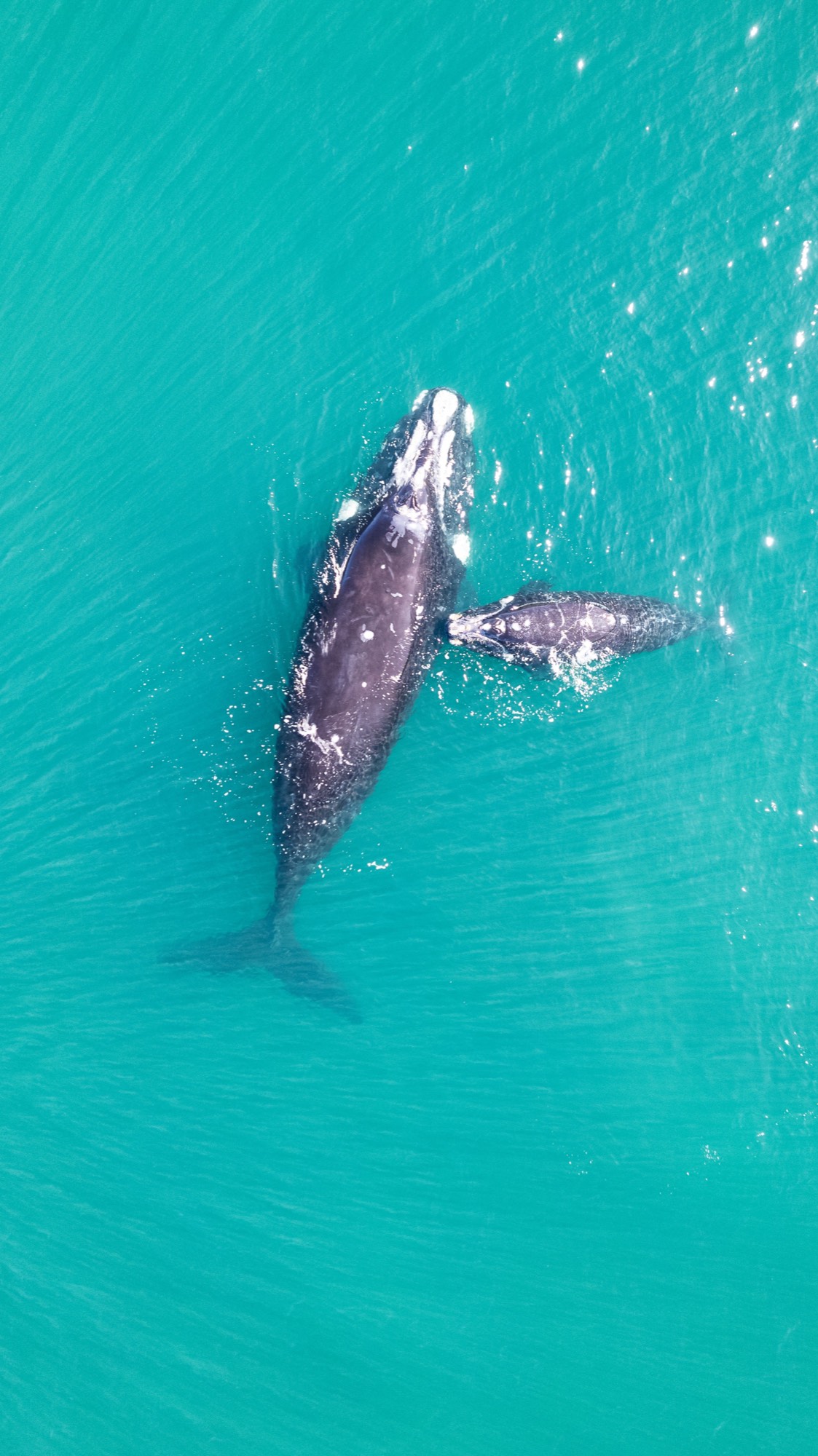
The different durations of lactation in toothed whales and baleen whales could be due to different prey. It is hard for a killer whale to learn how to catch seals on a beach. Comparatively, it is easier to catch zooplankton with baleen. In checking the stomach contents of stranded long-finned pilot whales, Gannon and his team found that the adults had prey remnants of 153 species. The calves only had 10. This shows that they were likely very limited in the prey they could catch as calves. Therefore, at the beginning of learning to catch prey yourself, it is an advantage to continue nursing as a supplement, which is common among toothed whales.